
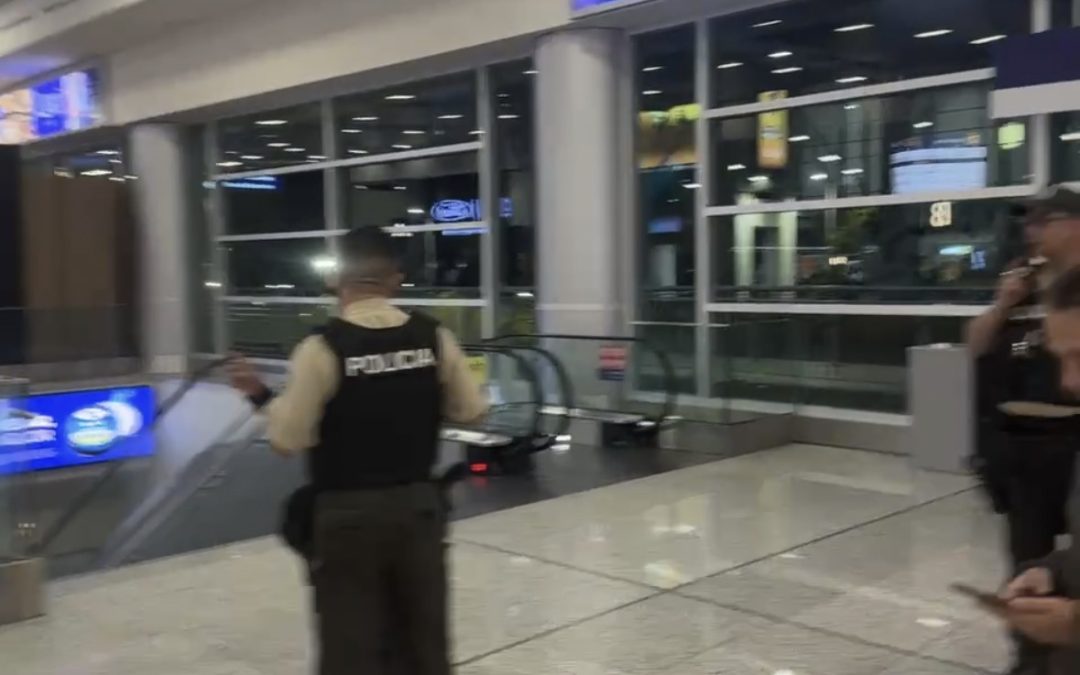
If you are actually stuck in that airport situation, this is what matters in real time
Let me slow this down for a second, because this is where people usually lose control of the situation (not legally), but practically.
If you are sitting in that room or that holding area, you are not thinking about Constitutional Court judgments. You are thinking about your flight, your phone battery, your luggage, and the fact that nobody is really explaining what is happening in a way that makes sense.
That is normal.
Nevertheless I hope everyone gets to understand, that confusion is not a legal defense.
Just because immigration officials are not explaining things well does not mean they have unlimited authority over you. And just because you are being told to “wait” does not mean you have no rights.
In these cases, time matters. Not in a theoretical way, but in a very real one. The longer someone is held without clarity, without a written decision, without access to counsel, the more serious the situation becomes from a constitutional standpoint.
And yes, despite the dreadful stories the courts in Ecuador do care about that distinction and constitutional guarantees and rights.
The “we are just processing it” problem
One of the most common things people hear in these situations is something like:
“We are just verifying your information.”
or
“You need to wait for a supervisor.”
or
“This is standard procedure.”
Sometimes that is true. Sometimes it is not. But legally speaking, those phrases do not replace a formal decision.
If you are being prevented from leaving, even temporarily, there should be a clear legal basis for it. Not just verbal instructions. Not just informal explanations from an officer at a desk.
Because one of the key things that you would do well to remember no matter where you are in the world: any sort of control over your right to leave is a form of legal detention.
And control is exactly what triggers constitutional protections.
You are not required to “cooperate quietly” with everything
There is a very common instinct among travelers, especially Americans and Europeans, to assume that the safest approach is to just comply with everything and not ask too many questions. Do not get me wrong, that can be very useful. Being cooperative can get you very far at times, but there is a difference between cooperation and passive acceptance of a situation you do not understand.
You are allowed to ask:
- “Am I free to leave?”
- “What is the legal basis for this?”
- “Is there a written decision?”
- “Am I being detained or inadmitted?”
- “Can I speak to a lawyer?”
Those are not aggressive questions. Those are basic clarity questions; in constitutional terms, clarity is not optional when liberty is restricted.
The moment things shift from immigration issue to legal issue
This is the line most people never see clearly.
An immigration issue becomes a legal liberty issue when:
- you cannot leave the physical space,
- your documents are being withheld,
- your movement is controlled by authorities,
- and there is no clear, reviewable written decision explaining why.
At that point, it is no longer just “airport processing.”
It is a restriction of liberty that may require judicial oversight, and that is exactly why habeas corpus exists in the first place. Not for dramatic criminal cases. Not only for prisons. But for any situation where a person’s freedom of movement is being restricted by the State without proper legal safeguards.
And yes, courts are supposed to look past labels
This is where Ecuador’s Constitutional Court jurisprudence becomes very practical. Thankfully the Ecuadorean Supreme court has repeatedly made the point that judges cannot just accept the government’s label for a situation and stop there.
If someone says “inadmission,” the court still has to ask what is actually happening in reality.
If someone is physically prevented from leaving, the court has to examine whether that restriction is justified, proportionate, and legally grounded.
That is the entire point of constitutional review.
Not to repeat the administrative language, but to test whether the reality matches the law.
A final practical point most people miss
If you ever find yourself in this situation, the goal is not to “win an argument” at the airport.
That is not how this works.
The goal is to make sure that:
- there is a clear written basis for what is happening,
- your rights are not being ignored simply because of the setting, and
- if necessary, the situation can be reviewed by a judge quickly.
Everything else is secondary.
You can resolve immigration issues later. You can appeal decisions. You can reapply. You can fix paperwork problems.
But you cannot easily fix a situation where your liberty was restricted without documentation, without explanation, and without access to legal review.
That is why these cases matter more than people realize.
Not because airports are dangerous places, but because they are places where legal assumptions can quietly replace legal process if nobody challenges them in time.
If you have ever been through something like this anywhere in Ecuador or elsewhere in Latin America, leave a comment and share what happened, those real experiences are often more useful to other travelers than people realize. And hopefully you never find yourself in a situation like this, but if you are ever stuck at an airport, being held somewhere without a clear explanation, or simply unsure whether what is happening is legal, give us a call or send us a message. The earlier someone looks at what is actually happening, the easier it is to protect your rights before the situation gets worse.
J. David Illingworth
For what reasons can this happen?
Hi Karen, there are quite a few reasons this can happen. Sometimes there is a legitimate immigration concern, but it can also be something relatively mundane: an apparent overstay, an incorrect or missing entry/exit stamp, inconsistent information in the system, a visa or passport issue, or even a name or identity being incorrectly flagged because it resembles someone else’s. In the case discussed here, there were separate circumstances that caused immigration to question the traveler’s admissibility, although the article focuses on what legal safeguards apply afterward rather than the underlying reason.
Most travelers will never encounter anything like this, but immigration problems tend to arise without much warning. It’s worth keeping copies of your entry records and immigration documents accessible and knowing who to contact if something goes wrong. Be prepared, hope for the best, and don’t assume every problem at the airport necessarily means you actually did something wrong.
I had a concerning incident at Quito airport two years ago. In the boarding area, just before they started calling for boarding, my name was called to the gate desk. A man there asked for my passport. He kept my passport and told me I was randomly selected to have my carry-on go through further inspection. He escorted me down a hall and then down some stairs and into a room where another man went through my carry-on thoroughly. Nothing was found, and as I expressed my concern that the plane was now boarding, he escorted me back to the gate. When I went to board, they stopped me, and the same man came back and told me, «I’m very sorry, but you have again been selected for inspection.» I expressed the obvious that I had just been inspected, but he said it was not under his control and that they had to reinspect the bag. The whole process was repeated, and I barely made it onto the plane. Looking back, I should have asked for more clarification and assistance from the airline personnel when the second inspection was requested.
Thank you for sharing this. The fact that you were taken away from the gate twice, had your passport retained during the process and were given essentially no explanation is interesting, although it may have been a security screening rather than an immigration matter. Do you remember whether the people who escorted you were immigration officials, police, airport security or airline personnel? That distinction would help determine whether your experience overlaps with the cases I’m looking into.
Great article but that’s most of South America, even written laws don’t apply in practice it seems.
This is exactly what we are hoping to fight. Ecuador has the constitutional precedent on this; the question is whether those standards are being followed at the airport.